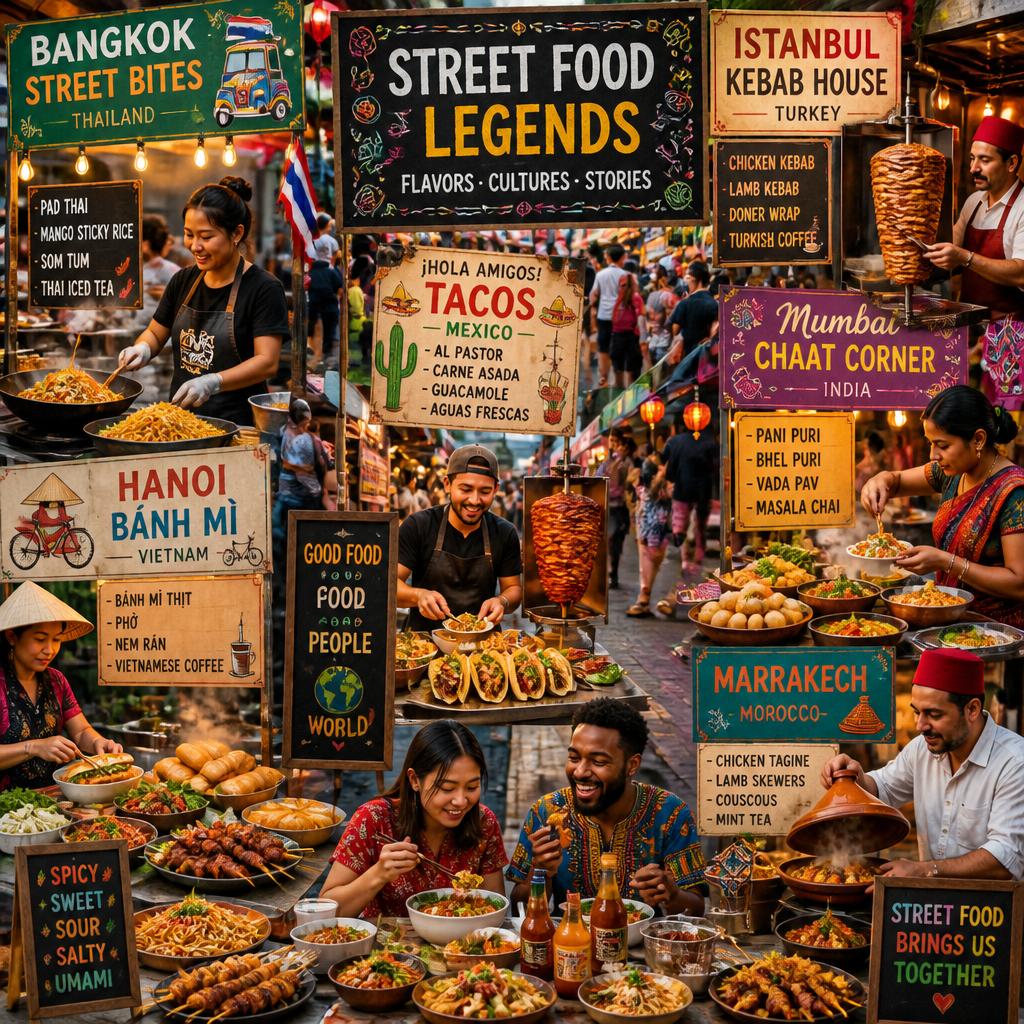
Street Food Legends That Locals Refuse to Share are more than cheap meals sold on busy sidewalks. They represent culture, family tradition, survival, and pride wrapped into a single plate. In almost every city, locals know one hidden cart, smoky alley stall, or late-night vendor they rarely recommend to tourists. Why? Because once the crowds arrive, the magic often disappears.
Some of the best street food experiences happen far away from glossy travel guides. Instead, they live in narrow backstreets filled with sizzling oil, charcoal smoke, loud conversations, and recipes protected for generations. From spicy noodles in Southeast Asia to flame-grilled meat skewers in South America, these legendary foods tell stories that restaurants often cannot replicate.
Travelers who chase authentic flavors quickly learn one thing: the best meals usually come from the smallest stalls. – fridascocina
Why Hidden Street Food Spots Feel More Authentic
The Power of Local Reputation
Street vendors survive because locals keep returning. They do not rely heavily on advertising or influencer campaigns. Instead, reputation spreads through word of mouth, family recommendations, and neighborhood loyalty.
That loyalty matters.
When a food stall stays crowded for decades without major branding, people naturally become curious. Many legendary vendors open only for a few hours because they sell out quickly. Others refuse to expand because they fear losing quality.
Tradition Over Trend
Unlike trendy food chains, legendary street vendors focus on consistency. Some families still grind spices manually, smoke meat over wood charcoal, or prepare broth overnight using old techniques.
That dedication creates flavors impossible to mass-produce.
The Most Legendary Street Food Cultures Around the World
Bangkok’s Midnight Noodle Markets
Where Heat, Smoke, and Spice Meet
In Bangkok, some noodle vendors operate past midnight and still attract long lines. Tiny plastic chairs fill crowded sidewalks while chefs cook at incredible speed over roaring flames.
The famous wok hei effect — the smoky flavor created by intense heat — gives Thai street noodles their addictive taste. Locals often avoid sharing their favorite stalls online because viral attention can double waiting times overnight.
What Makes Bangkok Street Food Special?
- Fresh herbs added at the last second
- Extremely high-heat cooking methods
- Sweet, sour, salty, and spicy flavors combined perfectly
- Affordable prices for high-quality dishes
Popular hidden dishes include spicy basil pork rice, boat noodles, and charcoal-grilled squid covered in chili sauce.
Mexico City’s Secret Taco Corners
Why Locals Protect Their Favorite Taco Stands
Mexico City might have thousands of taco vendors, yet locals fiercely debate which stall serves the best tacos.
Some vendors specialize in only one recipe for decades. Others slowly cook marinated meat overnight before serving it on handmade tortillas. Because competition is intense, locals often keep their favorite places private.
The Real Difference Between Tourist Tacos and Local Tacos
Tourist-focused taco shops sometimes simplify flavors. Hidden local vendors usually do the opposite. They serve richer sauces, stronger spices, and more traditional cuts of meat.
Many legendary taco stands become busiest after midnight, especially near nightlife districts.
Asian Street Food Legends That Became Cultural Icons
Japan’s Tiny Alley Grills
Small Spaces With Massive Flavor
In Tokyo, hidden alleyways called yokocho contain tiny food stalls serving grilled skewers, ramen, and fried snacks.
Most spaces fit fewer than ten customers.
That cramped atmosphere creates intimacy. Regulars know the owners personally, and newcomers often feel like they discovered a secret club.
Why These Tiny Food Spots Matter
- Recipes stay consistent for years
- Owners prepare food directly in front of customers
- Ingredients are often purchased fresh every morning
- Atmosphere feels deeply local and personal
Popular foods include yakitori chicken skewers, grilled eel, and soy-based ramen.
Vietnam’s Sidewalk Food Culture
Plastic Stools and Giant Flavor
Hanoi and Ho Chi Minh City offer some of the world’s most underrated street food experiences.
Locals casually sit on tiny plastic stools while eating steaming bowls of pho, crispy pancakes, and fresh spring rolls.
The simplicity hides serious culinary skill.
Vendors often spend years perfecting broth recipes. Some simmer beef bones for over 12 hours to create deep flavor without artificial additives.
Why Locals Rarely Share Their Favorite Food Spots
Fear of Social Media Crowds
One viral video can transform a quiet neighborhood stall into a chaotic tourist hotspot overnight.
Locals dislike that shift because:
- Prices sometimes increase
- Waiting times become unreasonable
- Food quality may decline under pressure
- Neighborhood culture changes quickly
As a result, many residents intentionally avoid posting their best discoveries online.
Some Recipes Are Family Secrets
Generations of Hidden Techniques
Certain vendors inherit recipes from grandparents or parents. These techniques remain tightly guarded because they separate legendary stalls from average competitors.
Some families refuse to reveal:
- Spice combinations
- Sauce preparation methods
- Cooking temperatures
- Marination times
That secrecy builds mystery and long-term reputation.
The Emotional Side of Street Food Culture
Food Connected to Childhood Memories
For many locals, legendary street food carries emotional value. A bowl of soup or grilled skewer might remind them of late-night family trips, school memories, or neighborhood traditions.
That emotional connection explains why residents feel protective.
Street food is not just food.
It becomes part of identity.
Why Travelers Fall in Love With Hidden Food Spots
Real Human Interaction
Street vendors often speak directly with customers while cooking. Travelers can watch every ingredient hit the pan, smell the spices instantly, and hear conversations happening around them.
That sensory experience feels alive compared to formal restaurants.
People remember those moments for years because they feel spontaneous and authentic.
Street Food Safety: How Smart Travelers Eat Like Locals
Follow The Crowds
One of the safest ways to choose street food is simple: watch where locals eat.
Busy stalls usually indicate:
- Fresh ingredients
- High turnover
- Trusted hygiene
- Consistent quality
Empty stalls, meanwhile, can signal problems.
Observe the Cooking Process
Fresh Cooking Matters
Legendary street food vendors typically prepare dishes directly in front of customers. High cooking temperatures help reduce food safety risks while improving flavor.
Travelers should look for:
- Clean cooking surfaces
- Fresh ingredients
- Vendors using gloves or utensils properly
- Active food preparation instead of pre-made dishes
Famous Street Foods That Started as Poor Man’s Meals
Everyday Food That Became Global Icons
Many world-famous street foods originally existed because working-class communities needed cheap, filling meals.
Examples include:
- Tacos in Mexico
- Pho in Vietnam
- Hot dogs in the United States
- Currywurst in Germany
- Satay in Indonesia
Over time, these simple foods evolved into cultural symbols recognized worldwide.
The Rise of Modern Street Food Tourism
Travelers Now Plan Entire Trips Around Food
Food tourism has exploded in popularity because travelers want deeper experiences. Instead of visiting only famous landmarks, many tourists now explore neighborhoods through local food culture.
Street food tours continue growing because they combine:
- History
- Culture
- Community interaction
- Affordable exploration
- Unique flavors
People increasingly value authenticity over luxury dining.
Social Media Changed Street Food Forever
Exposure Creates Opportunity and Pressure
Platforms like TikTok and Instagram helped unknown vendors gain worldwide fame. Some street sellers transformed from neighborhood cooks into international attractions within weeks.
However, sudden fame also creates challenges:
- Long customer lines
- Rising ingredient costs
- Pressure to expand quickly
- Loss of local atmosphere
That balance between popularity and authenticity remains difficult.
Hidden Street Food Gems Worth Searching For
Unexpected Places Often Deliver the Best Meals
Some legendary vendors operate:
- Under train stations
- Behind marketplaces
- Near fishing ports
- Beside construction areas
- In residential alleys
These hidden spots rarely look glamorous. Nevertheless, they often serve unforgettable food.
Experienced travelers know appearance can be misleading.
Sometimes the oldest cart with faded paint serves the best meal in the entire city.
Street Food Legends That Locals Refuse to Share continue attracting adventurous travelers because they offer something rare: genuine connection through food. Hidden vendors preserve traditions, protect family recipes, and create flavors shaped by generations of experience. While flashy restaurants come and go, these humble street stalls remain cultural landmarks built on trust, memory, and community pride. Travelers willing to explore beyond tourist zones often discover that the most unforgettable meals are not found inside luxury dining rooms, but beside smoky sidewalks filled with locals quietly enjoying food they almost never recommend publicly.