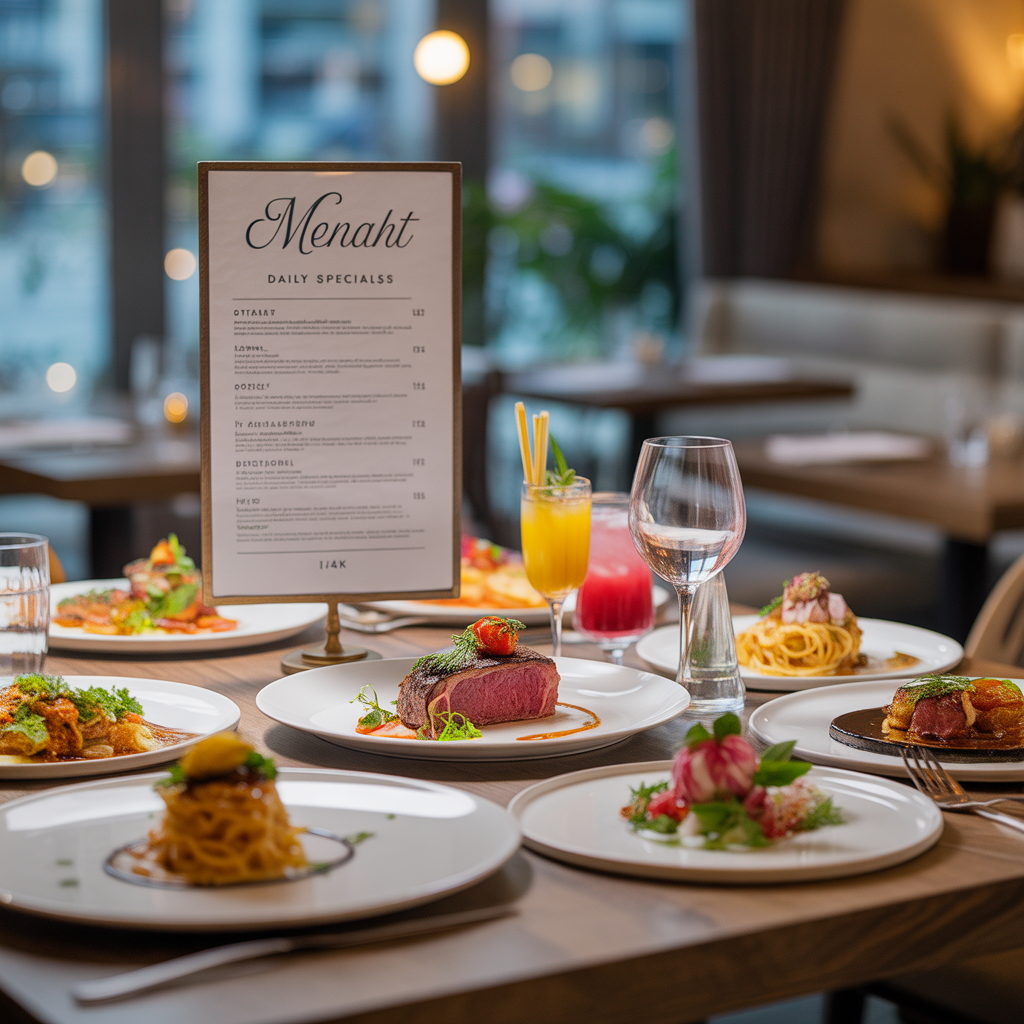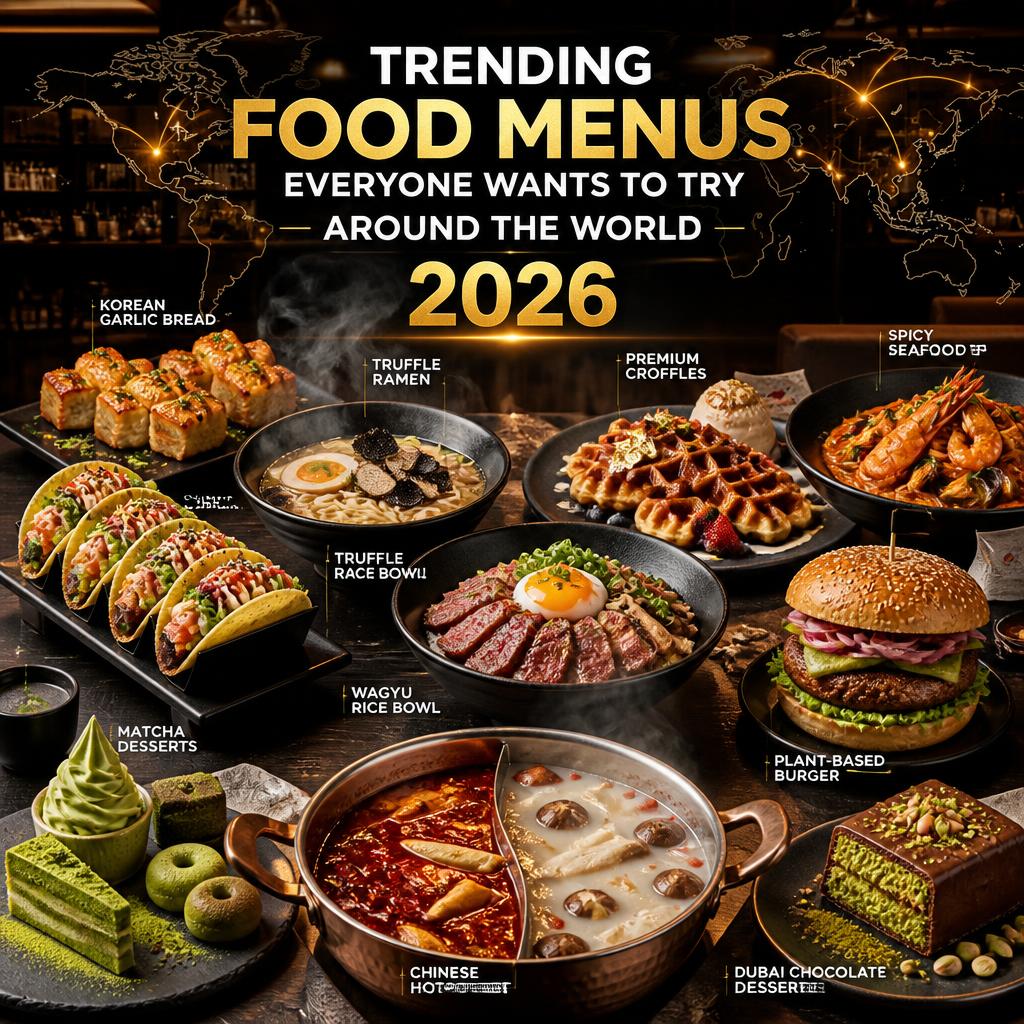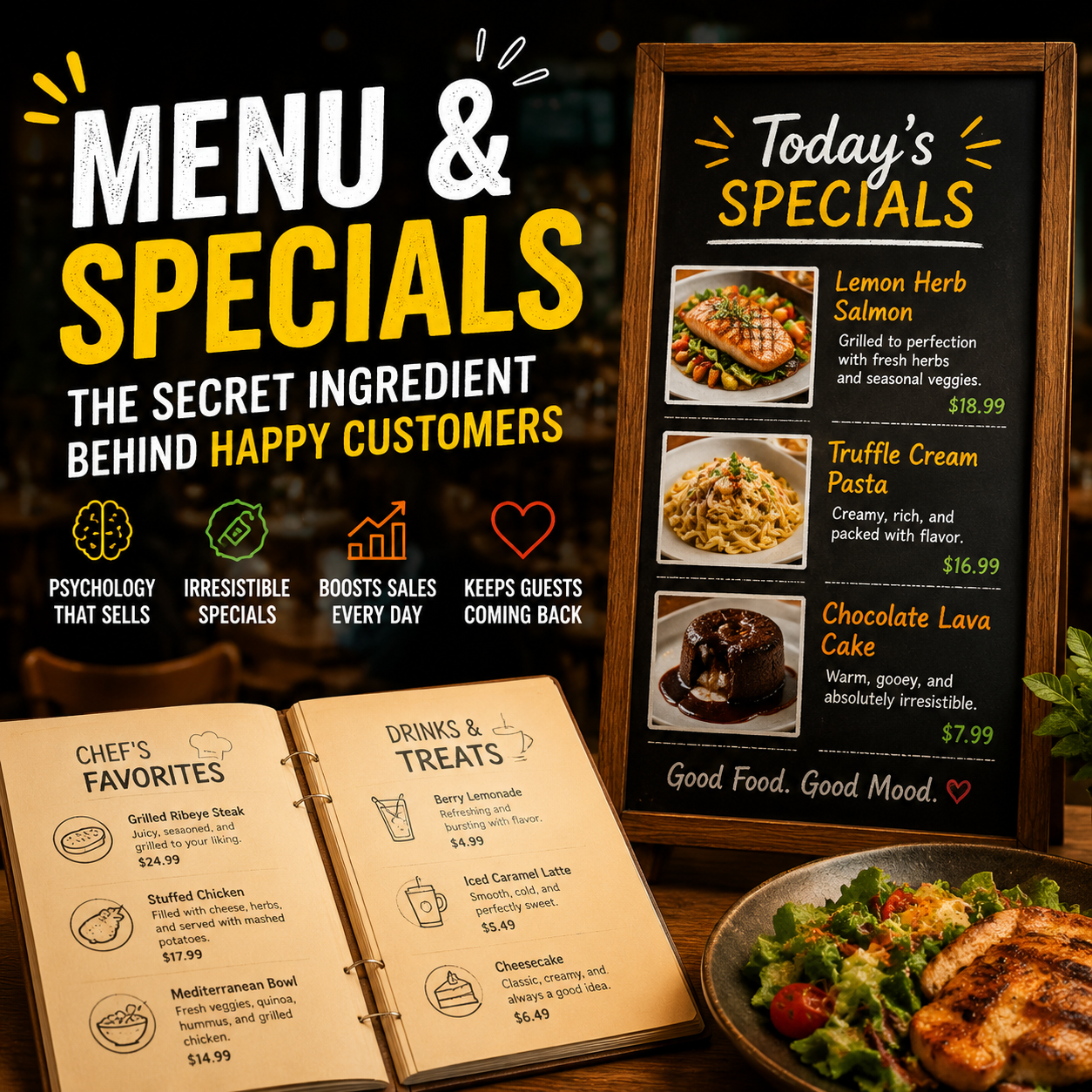
Why Menu & Specials Always Win Hungry Crowds Every Time Out! instantly captures the heart of how restaurants attract attention, boost sales, and keep customers coming back for more. The idea behind menu design and daily specials isn’t just about food—it’s about psychology, timing, storytelling, and subtle persuasion that influences what people choose to eat without them even realizing it. – fridascocina
The Psychology of Menu Design
Menu design is not random; it is deeply connected to psychology and human decision-making. Restaurants carefully structure menus so the eyes land on high-profit dishes first.
How the Brain Reads a Menu
The human brain doesn’t scan menus evenly. Instead, it follows patterns influenced by visual hierarchy, price anchoring, and emotional triggers. This is where gastrophysics—the science of how we experience food—plays a surprising role.
Emotional Triggers in Food Choices
Warm descriptions like “slow-cooked,” “homemade,” or “signature” activate emotional responses that make dishes feel more appealing than they actually are in description alone.
What Makes Specials Irresistible
Daily specials create urgency. When something is labeled “today only,” customers feel a natural pressure to choose it.
Scarcity Effect in Action
Scarcity is a powerful behavioral trigger. When people believe something won’t be available later, they value it more immediately.
Limited-Time Appeal
Even simple dishes become exciting when framed as exclusive. This taps into neuroscience principles where the brain reacts strongly to perceived rarity.
Who Creates Menu & Specials Strategy
Behind every successful restaurant menu is a team of chefs, marketers, and sometimes even data analysts.
Role of Chefs and Restaurateurs
Chefs design dishes based on creativity and cost efficiency, while restaurateurs focus on profit margins and customer behavior patterns.
Marketing Experts in the Kitchen
Modern restaurants even employ marketing specialists who study customer flow, ordering habits, and seasonal preferences.
Where Menu & Specials Work Best
Not all environments use menus the same way. The strategy changes depending on the setting.
Restaurants vs Cafés vs Hotels
- Restaurants focus on full-course storytelling
- Cafés highlight quick decisions and impulse buys
- Hotels emphasize luxury and variety
Each setting adjusts its menu psychology differently to match customer expectations.
When to Update Menu & Specials
Timing plays a major role in customer engagement. A stale menu can quickly lose attention.
Seasonal Influences and Trends
Menus often shift based on seasons—summer brings lighter meals, while winter leans toward comfort food.
Weekly and Daily Rotation Strategy
Some businesses even rotate specials daily to keep repeat customers curious and engaged.
Why Customers React to Specials
Human behavior is predictable when it comes to food choices. Customers often think they are choosing freely, but subtle cues guide them.
Behavioral Economics Behind Choices
Color contrast, price positioning, and item placement all influence ordering decisions without direct persuasion.
How to Optimize Menu & Specials for Sales
To improve restaurant performance, businesses must balance creativity with strategy.
Practical Tips for Business Owners
- Highlight high-margin dishes visually
- Use descriptive storytelling in dish names
- Rotate specials frequently to maintain interest
- Keep menu layouts simple but strategic
At the center of all these strategies lies Menu & Specials, the core mechanism that shapes customer decisions and drives daily revenue growth in food businesses.
Digital Transformation of Menus
Menus are no longer just printed sheets—they are evolving into digital experiences.
AI and Data-Driven Menu Engineering
With the help of artificial intelligence, restaurants can now analyze ordering patterns, predict customer preferences, and adjust menus in real time for maximum profitability.
What, Who, Where, When, Why, and How of Menu Strategy
- What: A structured system that guides food selection
- Who: Chefs, marketers, and restaurant owners
- Where: Restaurants, cafés, hotels, and digital platforms
- When: Daily, seasonally, or during special events
- Why: To influence customer behavior and increase sales
- How: Through design, psychology, pricing, and storytelling
This framework shows how deeply structured the food industry really is, even when it feels casual to the customer.
Modern Trends in Menu Psychology
Modern dining trends are shifting toward personalization and experience-based dining.
Experience Over Price
Customers today value experience more than cost. A well-designed menu can turn a simple dish into a memorable story.
Cultural Fusion Influence
Global cuisine mixing is now a major trend, blending flavors and presentation styles from different cultures into one menu.
Future of Menu Engineering
The future of menus is dynamic, interactive, and highly personalized.
Smart Menus and Predictive Ordering
Smart menus can suggest dishes based on past behavior, weather conditions, and even time of day.
The world of food service is far more strategic than it appears at first glance, and everything from layout to language plays a role in shaping customer decisions. From psychological triggers to digital innovation, restaurants constantly refine their approach to stay competitive and appealing.
Understanding how Why Menu & Specials Always Win Hungry Crowds Every Time Out! works in real-world settings reveals just how powerful subtle design and behavioral science can be in everyday dining experiences.